


How are Data Centers Cooled?

To create optimal conditions and ensure that the entire system runs smoothly, it is necessary to maintain the optimal temperature in the range of 18 to 25 degrees Celsius (or 64 to 77 degrees Fahrenheit).
Now, let’s see how servers are cooled with the help of data center rack cooling systems.
How Does the Cooling System Work?
Today, they are focused on equipment stability, and a key element of this process is maintaining optimal temperatures. Maintaining optimal humidity and temperature is vital for hardware and server systems.
Energy efficiency plays a key role in the operation, and it is essential to clearly understand how critical efficient cooling is to reduce energy consumption and operating costs. The equipment’s quality, reliability, and service life are its main characteristics, and your work depends on them. But any environmental changes can have an impact, which is only sometimes positive. Any humidity or heat can damage the devices. You will have to repair or replace parts prematurely, or even worse, all the equipment.
In such conditions, creating the right conditions becomes vital. That is why the issue of cooling server cabinets and the rooms in which they are located is one of the first that should be taken into account at the organization’s planning stage.
How to cool the data center is an aspect that must be considered on time. An utterly comprehensive approach is required here. Good air circulation should be organized so that cold ceilings replace hot ones. Here, you can use one of the solutions:
- Natural circulation. The air outside the room will be cooled. And the hot air from inside comes out of the room. This natural air circulation is one of the simplest and most effective ways, although it is suitable only for small systems.
- Outdoor air cooling. Equipment removes hot air, but cold air from the outside penetrates to cool it.
- Heating or cooling to the optimum temperature. And if the process takes place at the expense of the equipment, it should constantly function. If it breaks down, it needs to be replaced urgently.
Note that not only the temperature but also the humidity and some other indicators are controlled, as they can also cause system failures.
The Best Solutions for Cooling
Since the server cabinets perform a vital function, it is worth providing systems that can maintain optimal conditions in them. Multifunctional solutions that can support conditions have now been thought out, even if environmental conditions are challenging. Among the solutions, it can be noted separately:
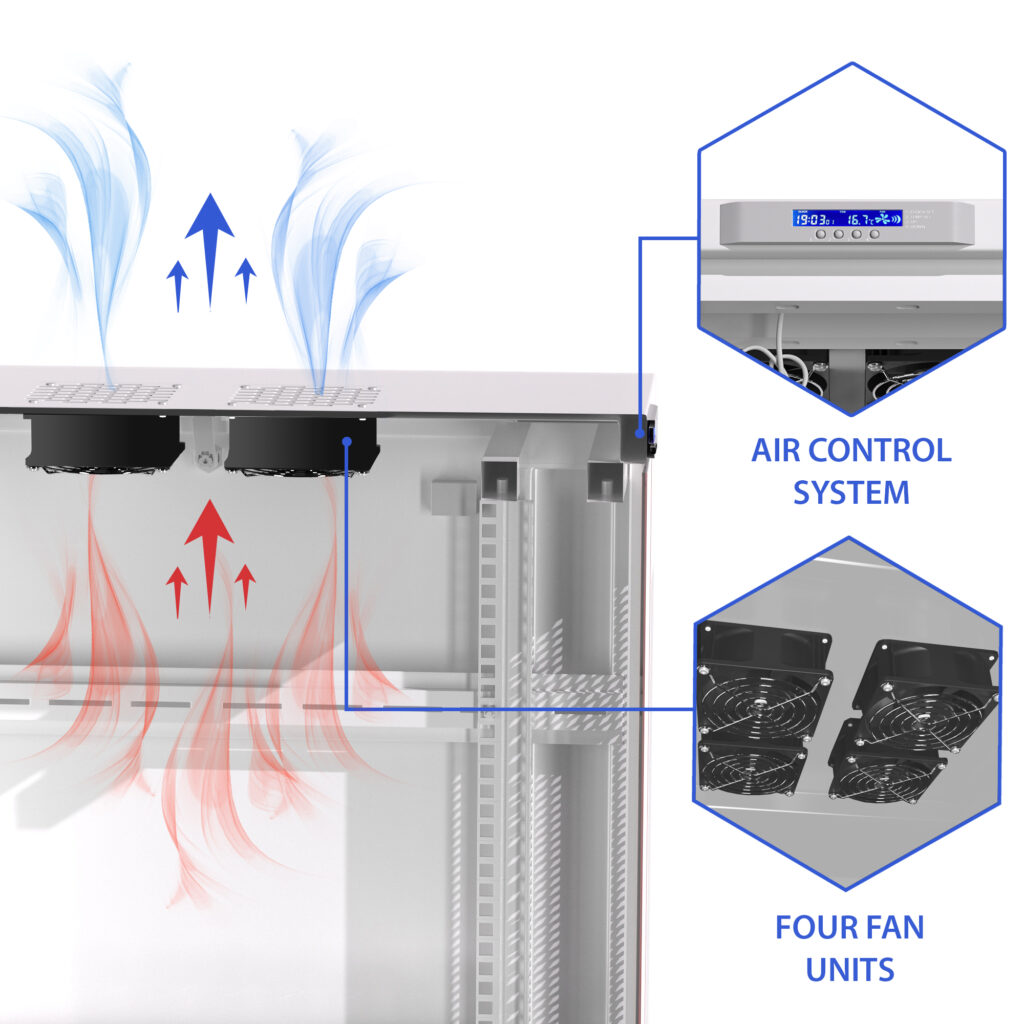
- Temperature control panel with fans
The device itself is a whole set of sensors, each equipped with a ventilator. Their main purpose is to maintain conditions inside the closet. The air is constantly circulating, so the temperature inside does not reach a dangerous limit.
- Shelf fan trays
These durable metal constructions accommodate several fans in a row. They are used for large floor-standing server cabinets where many devices are housed.
- Wall-mount roof fan kit
This set of fans is designed for installation on top of the cabinet. It allows directing the airflow and achieving the best possible circulation. The kit has all the necessary accessories to install and support fans reliably.
Choosing the right cooling equipment is the main determining factor, so this issue should be given special attention.
It is worth considering the dimensions, working conditions, and parameters of the room itself. When selecting a server cabinet model, remember that the width of furniture is usually 19 inches to fit most server types of hardware fastened to mounting rails.
Additionally, one must ask how cool should a server room be, as maintaining an optimal temperature is crucial for the equipment’s performance and longevity.
Innovative Refrigeration Methods
Technology does not stand still, and standard solutions come instead of more advanced options. The main reason for the proliferation of these technologies is their potential to reduce energy consumption and improve cooling efficiency. Among the modern solutions, how do data center rack cooling system works can be highlighted:
- Liquid cooling (immersion, single-phase immersion). This method consists of immersing the equipment in a non-conductive liquid that removes heat efficiently. This innovative solution significantly reduces the load on traditional ventilation systems and improves the heat sink.
- Adiabatic cooling. This method uses a natural evaporation process to cool the air. Water evaporates by absorbing heat from the environment, which reduces the temperature of the air entering.
- Free cooling. The use of cold outside air to cool the room. This method is especially effective in regions with cold climates and can significantly reduce energy consumption costs.
Other Solutions that May Affect the Airflow
We analyzed how to cool the server room and found that in addition to using forced ventilation systems, it is possible to regulate the airflow by placing special equipment and some other solutions. So, let’s figure out how to cool server room without fans.
- Shelf placement. If it is correct to provide for such an important aspect as the position at the preparatory stage, you will not have to think much about additional means for air circulation.
- Server rack cable management. You can’t just put cables in a circle and expect everything to work well. It is better to use special storage facilities to prevent the cables from getting tangled and frayed. Not only do devices break down from tangled cables, but air circulation is slow, so the devices overheat.
- Monitoring sensors. Special modern devices can now monitor the temperature level for you. Such sensors record all deviations. Administrators can only respond to the sensors in time.
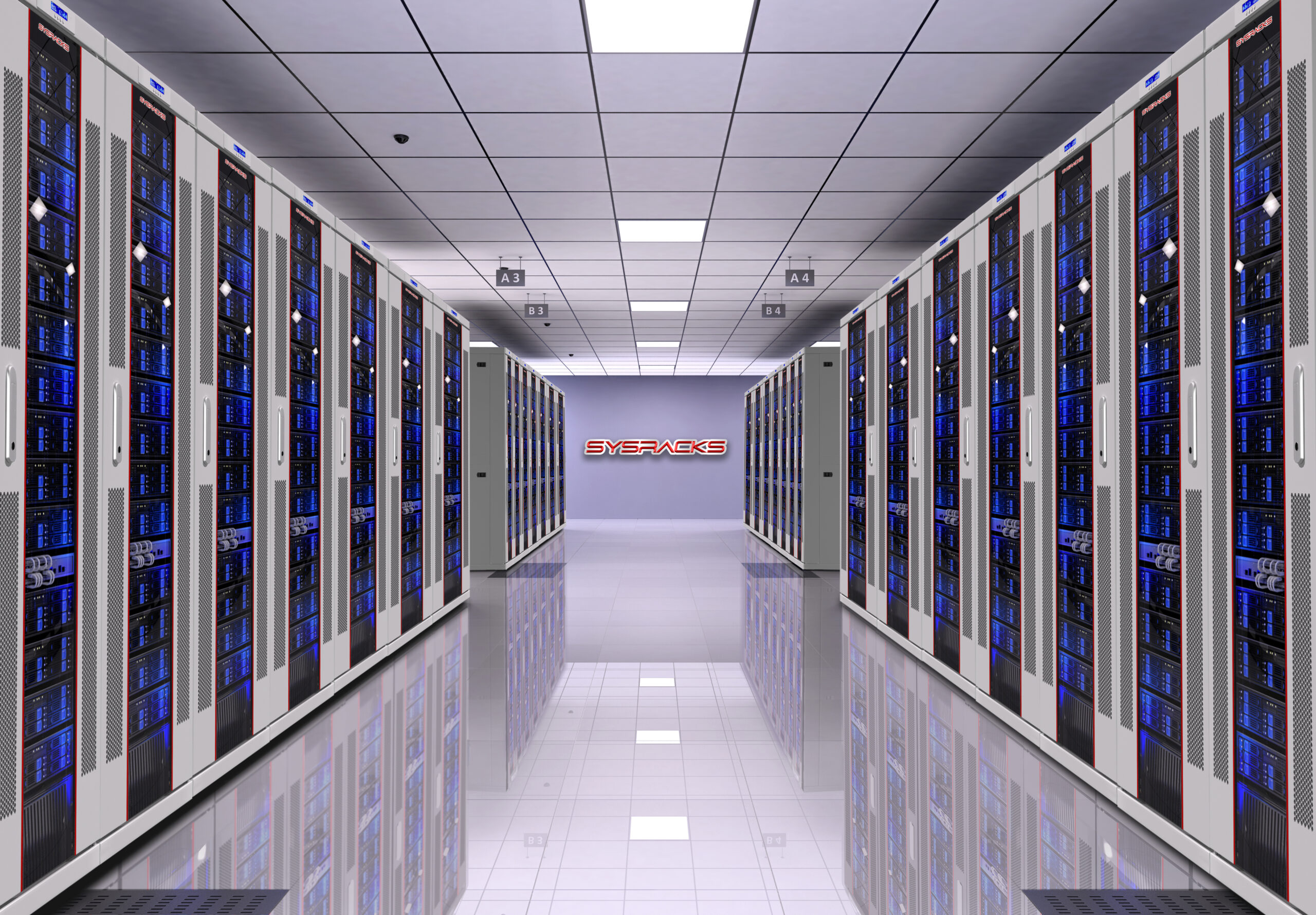
- Insulation of hot and cold aisles. Proper hot and cold aisle insulation in data centers is essential for efficient thermal management. This minimizes the mixing of air flows and improves cooling efficiency.
- Sealants and underfloor air distribution systems. These help to control the airflow more precisely, ensure that it is directed to the necessary cooling areas, and prevent leaks.
The efficiency and stability of the equipment depend on many factors, and one of the most important is maintaining optimal conditions. High humidity, constant temperature changes, and other negative factors affect the quality of work and service life. That is why it is worth paying special attention to such issues. This issue should be taken into account at the very preparatory stage. This is easier and more economical because then you will not need additional repairs or replacement of all system devices.
You have questions? We will help you
- 804 Rue Deslauriers, Montreal, H4N 1X1, Canada